The successor to the ID.3 is called ID.3 Neo. Digital product updates for ID.4, ID.5 and ID.7

12 March 2026
- ID.3 gets extensive update and a new name
- ID.4, ID.5 and ID.7 can now be ordered with the latest software generation
- New features such as digital key and extended app store
- Enhanced operating concept with buttons on the steering wheel
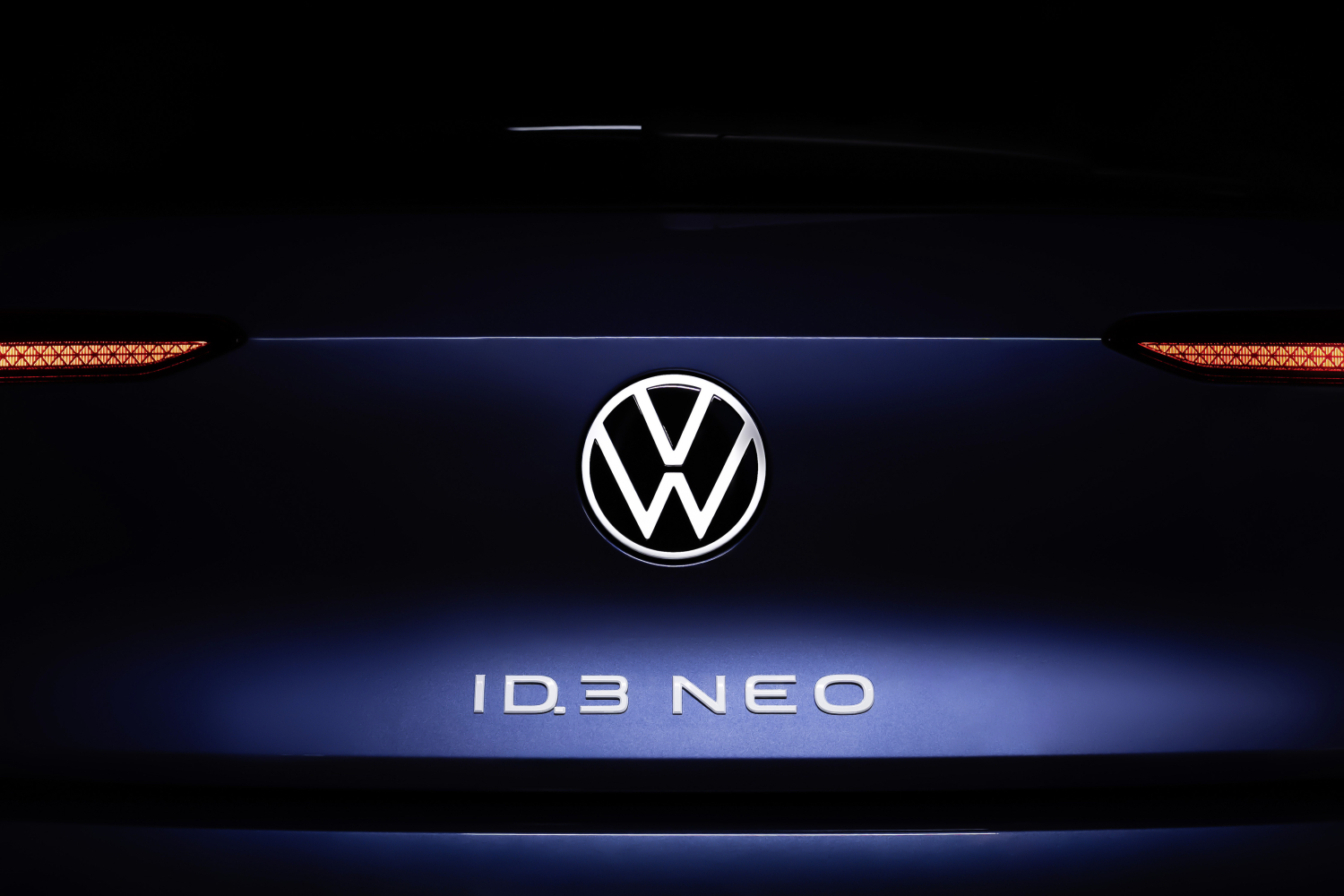
Wolfsburg – The successor to the ID.3 is in the starting blocks with a new name and will celebrate its world premiere as the ID.3 Neo1 in mid-April. Thanks to the latest software generation, the electric compact model comes with a host of new functions. These include, for example, the enhanced Travel Assist with traffic light detection and One Pedal Driving, where the vehicle recuperates until it comes to a standstill. The ID.4, ID.5 and ID.7 are already available to order as the first models equipped with this software, the above-mentioned functions and the new Innovision infotainment system. In addition, all new ID. models now have the option of supplying power to external devices – from electric grills to e-bikes – with an output of up to 3.6 kW directly from the high-voltage battery using the Vehicle-to-Load function.
Kai Grünitz, Member of the Volkswagen Board of Management responsible for Technical Development, says: “The new software generation brings more performance and an even better customer experience to the ID. models. The new Volkswagen electric models in the small and compact vehicle segments – ID. Polo1, ID. Polo GTI1, ID. Cross1 – will also soon be launched on the market with these new innovations, offering more flexibility in everyday life and for leisure activities.”
Software and hardware are designed to meet new or future regulatory conditions. These include the requirements of the European emissions standard Euro 7, the Californian standard ZEV3 (zero emission vehicle) and the EU directive GSR2 (General Safety Regulation 2), which is intended to further increase road traffic safety.
Additional services. The new ID. models also feature the new Innovision infotainment system. A new app store has also been integrated into the In-Car Shop of the new infotainment system, which allows functions and services to be activated or extended digitally, flexibly and on a vehicle-specific basis. As with a smartphone, popular apps from areas such as audio, video streaming, parking, charging and gaming are available for download here.
New option – digital vehicle key. A digital key is now also available as an option for all models. This enables convenient access to the vehicle using a mobile device (smartphone, smartwatch). The digital vehicle key supplements the classic vehicle key. Communication takes place wirelessly in a similar way to payment processes with a smartphone; a special app is not required. There is also a change in the operating concept. All future ID. models have buttons on the steering wheel that improve intuitive operation of the various functions.
More flexibility thanks to Vehicle-to-Load. With the new software generation, the Vehicle-to-Load function is also being introduced in the ID. models and thus the ability to power electrical devices directly from the vehicle battery. External devices such as an electric grill, coffee maker or even an e-bike can be powered or charged directly from the high-voltage battery with up to 3.6 kW. This is possible using a 230 V socket in the interior and – with a separate adapter – also via the mode 3 connection of the charging socket.
Entry-level models more efficient and with greater range. There are also new developments in the areas of engine and battery: the ID.42 and ID.53 Pure entry-level models are equipped with the APP 350, a new 140 kW (190 PS) drive system that offers increased torque and lowers fuel consumption compared with the previous APP 310 motors. This enables the range of the ID.4 to be increased by up to 40 km (WLTP)4, for example. In combination with a new lithium-iron phosphate (LFP) high-voltage battery (58 kWh net), this is an impressive package that is robust and very efficient.
- ID.3 Neo, ID. Polo, ID. Polo GTI, ID, Cross – Near production prototypes. The vehicles are not yet for sale.
- ID.4 Pure: Combined power consumption 16.0 kWh/100 km; combined CO2 emissions 0 g/km; CO2 class: A
- ID.5 Pure: Combined power consumption 15.6 kWh/100 km; combined CO2 emissions 0 g/km; CO2 class: A
- Range determined on the rolling road test bed in accordance with the Worldwide Harmonized Light Vehicles Test Procedure (WLTP) in the most range-favourable equipment variant. The actual WLTP range values may differ depending on the equipment. The actual range achieved under real conditions varies depending on the driving style, speed, use of comfort features or auxiliary equipment, outside temperature, number of passengers/load, and topography
Media contact
Volkswagen Communications
Jochen Tekotte
Spokesperson ID.3, ID.4, ID.5
Tel.: +49 152 57705433
jochen.tekotte@volkswagen.de
Volkswagen Communications
Francisca Volze
Spokesperson ID.7
Tel.: +49-1522-2997411
francisca.volze@volkswagen.de
More at
volkswagen-newsroom.com

The Volkswagen Passenger Cars brand has a global presence and produces vehicles at 28 locations in 12 countries. In 2025, Volkswagen delivered about 4.7 million cars. These include bestsellers such as the Polo, T-Roc, T-Cross, Golf, Tiguan and Passat as well as the successful all-electric models of the ID. family. Last year, the company handed over around 382,000 all-electric vehicles to customers worldwide.
About 170,000 people currently work at Volkswagen around the world. With its “BOOST 2030” strategy, the company is consistently driving forward its development into the most desirable brand for sustainable mobility.
Photos (5)
Originally published by Volkswagen
View original article →
Tags
Spotted an issue with this article, or is this your material? Rights holders