WITH futuREady, THE RENAULT BRAND IS GEARING UP FOR A NEW GROWTH CYCLE BASED ON A MAJOR PRODUCT AND ELECTRIFICATION OFFENSIVE AT EUROPEAN AND INTERNATIONAL LEVELS

11 February 2026
- Marking the launch of Renault Group's futuREady strategic plan, the Renault brand is presenting the three key levers that will drive its growth between now and 2030
1. Strengthen brand positions in Europe:
-
-
- By launching 12 new products between now and 2030
- By building on segments A - B and initiating a new offensive in segments C - D.
-
2. Deploy electrification across the range:
-
-
- By extending the full hybrid E-Tech offering beyond 2030 in Europe and international markets
- By developing a new generation of electric vehicles based on a new platform, RGEV medium 2.0, built for range, efficiency and ultra-fast charging
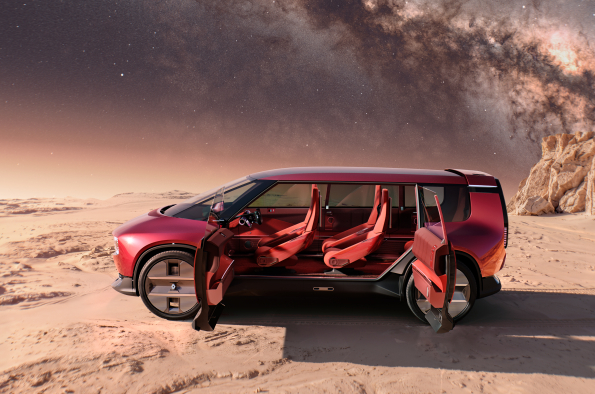
- By creating new-generation of voitures à vivre, an approach illustrated by the Renault R-Space Lab concept
- By bringing to market a new generation of all-electric vans with 800-volt Software Defined Vehicle (SDV) architecture
-
3. Step up the brand offensive on international markets with the launch of 14 new models between now and 2030:
-
-
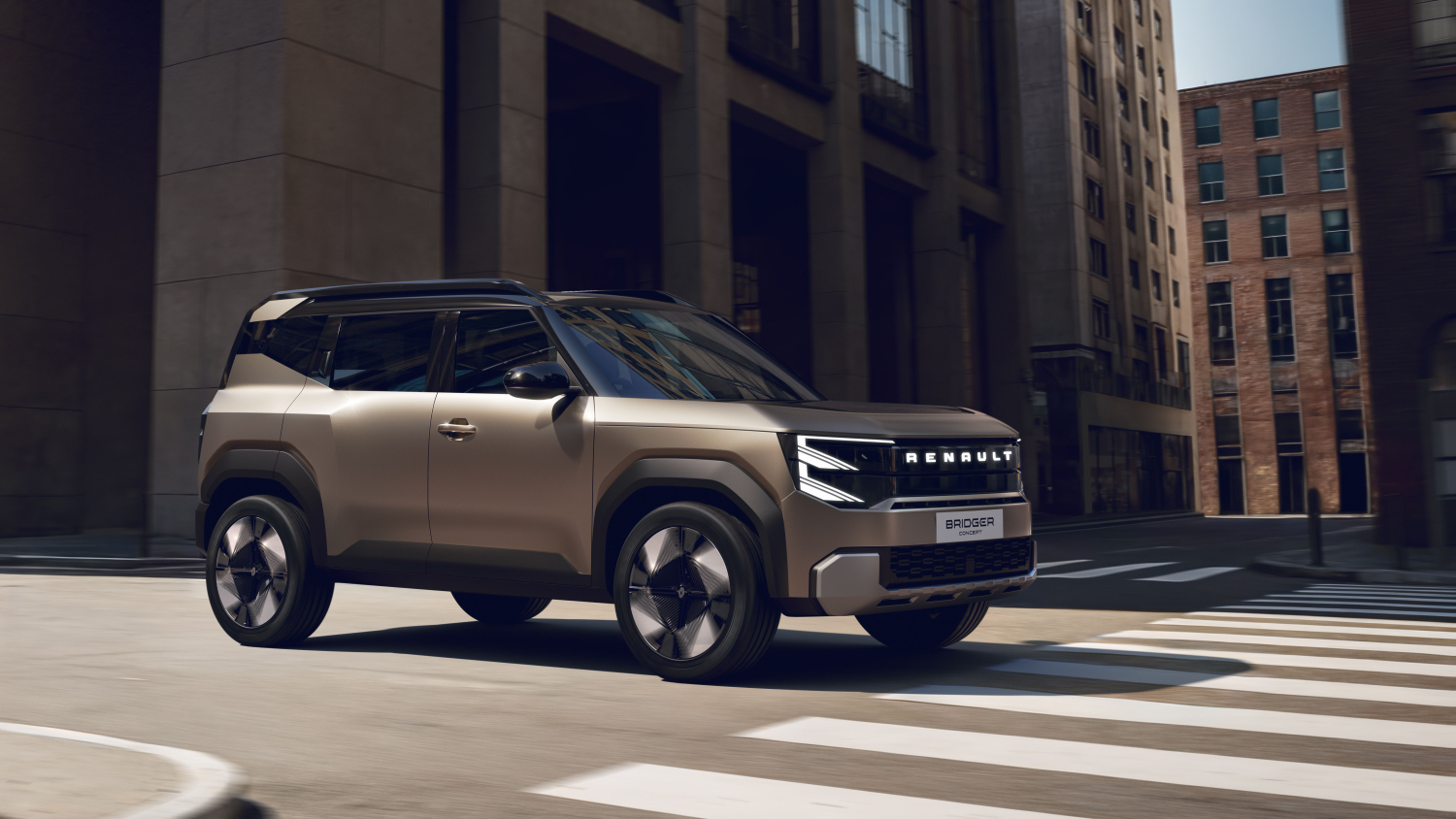
- These ambitions are expressed by the Bridger Concept show car, the forerunner to a new B-segment SUV. A multi-energy model with an electric version, this future vehicle will be built in India for the Indian market and other regions, in order to meet the needs of urban populations
-
-
- Renault brand objectives for 2030:
-
-
- Sell more than 2 million vehicles, of which half outside Europe
- Increase the proportion of electrified sales to 100% in Europe and 50% outside Europe
-
During the announcement of Renault Group's futuREady strategic plan, the Renault brand is presenting its strategy for growth between now and 2030.
“We are now accelerating the next cycle of growth for the Renault brand thanks to three powerful drivers. Our ambition is clear: strengthen our European leadership, accelerate electrification, and go faster internationally to confirm Renault as the number one French automotive brand worldwide.
By 2030, our objective is to sell 2 million vehicles worldwide, with half of sales generated outside Europe.
Renault is aiming for 100% electrified sales in Europe and 50% electrified sales outside Europe, while delivering strong and sustainable profitability.”
Fabrice Cambolive, Chief Growth Officer, Renault Group, Chief Executive Officer, Renault brand
Strengthen Renault brand positions in Europe
In Europe, Renault plans to launch 12 new models between now and 2030, forming a comprehensive range with maximum appeal, offering the right technology for each market and the right products for each customer.
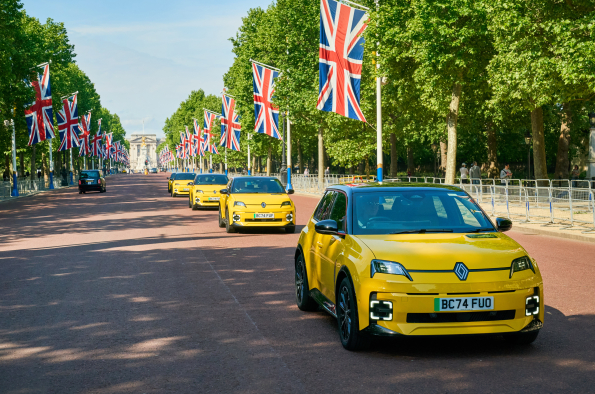
In the A - B segments, where Renault enjoys historic leadership, the brand will continue to build momentum. To this end, it will rely on the strong, complementary models launched recently, including New Clio, Renault 5 E-Tech electric and Renault 4 E-Tech electric, as well as Twingo E-Tech electric, to extend its market coverage to the A segment.
In segments C - D, which currently account for 30% of sales, Renault is preparing a second wave of vehicles, with a new generation of electric and hybrid models, its ambition being to market a continuous stream of value-creating innovations, while improving affordability.
Deploy electrification across the range
The hybrid powertrain will remain a cornerstone of the European range. Renault has confirmed plans to maintain its full hybrid E-Tech offering in Europe after 2030. This hybrid powertrain is recognised for its efficiency in terms of fuel consumption and CO2 emissions. For many customers, it is the first step in their transition to an all-electric vehicle.
The brand will also be stepping up its deployment outside Europe to develop an alternative to diesel engines in a number of regions around the world. Some models will offer an electric powertrain, alongside hybrid and ICE solutions.
All-electric vehicles also remain at the very heart of Renault's strategy. The next generation of C - D segments vehicles will be built on the new RGEV medium 2.0 electric platform. Designed for European markets, it offers extended range, 800V architecture for ultra-fast charging, cutting-edge technologies and optimised efficiency. Designed for segments B+ to D, this modular and versatile architecture is able to accommodate all vehicle body styles. It will be implemented in three configurations: 100% electric with a range of up to 750 km WLTP, 4x4 electric with a towing capacity of up to 2 tonnes, or electric with a range extender, increasing the total range to 1,400 km. As a result, Renault offers an innovative, reassuring and simple solution, combining the advantages of all-electric mobility, at ease in demanding conditions, with the freedom of a long-range drive that makes no compromises on the electric experience.
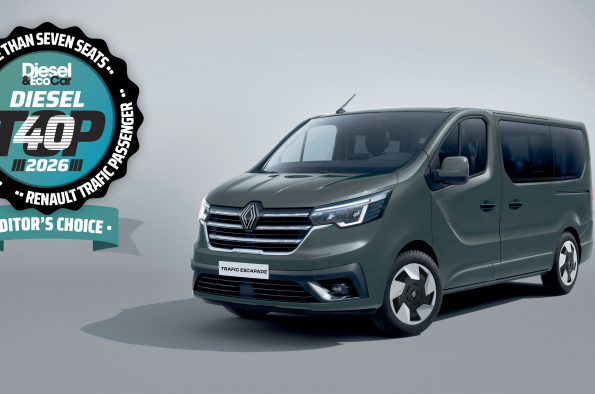
Turning to commercial vehicles, Renault is stepping up the electrification process with Trafic van E-Tech electric. The brand’s first software-defined vehicle (SDV) will also be the first one to embark the 800technology enabling fast-charging with a range of up to 450 km.
Renault R-Space Lab, a laboratory for exploring the spirit of voitures à vivre
Renault is also seeking to reinvent the in-car experience, designed and conceived to meet wide-ranging customer needs. Based on the work of Futurama, the innovation laboratory set up by Renault Group to explore and prepare smart vehicles for 2030, Renault R-Space Lab is fully in line with this approach. This innovation demonstrator redefines the in-car experience offered by our voitures à vivre, with a bright, modular cabin designed for living, in which technologies and interior space can be reconfigured intuitively according to purpose. Without being the forerunner to a production model, R-Space Lab clearly illustrates the spirit and DNA of the brand.
A connected, high-tech cockpit focused on passengers
The cockpit reinterprets Renault's DNA with a human-centred approach, in which technology serves only to deliver real value in use. The curved openR panorama screen occupies the entire width of the dashboard, displaying speed, ADAS and multimedia data with optimum legibility.
The main functions are controlled as naturally as a smartphone from the central touchscreen. The compact steering wheel frees up the driver’s vision and improves driving comfort, with steer-by-wire technology.
In line with the human first program, R-Space Lab is exploring new devices dedicated to the safety of passengers and other road users, such as a tactile alcohol detector to educate and support young drivers; or in-car Artificial Intelligence. This could enhance the Safety Coach with contextual functions and personalised recommendations, for example, or it could help drivers find their way around the vehicle or play the role of a driving assistant for those who choose to use it.
A comfortable, modular interior
A one-box vehicle, 4.5m long and 1.5m tall, Renault R-Space Lab combines flowing lines with generous interior space. The advanced openR panorama screen frees up space at the front. On the passenger side, the front and curtain airbags are built into the seat, freeing up the dashboard and making space for an ingenious multifunction glovebox that can hold a tablet or bag, for example, or fold out to provide space for relaxing and extending the legs. The passenger seat can also slide back to the second row for easy interaction with passengers in the rear or a child in a car seat.
The three individual rear seats are identical in width with slightly reclining backrests to enhance the comfort of each passenger. The folding backrests and flip-up seat cushions work with the flat floor plan to deliver a fully modular layout. The seats can slide right up to the front to free up sufficient boot space for a bicycle. When the seat cushions are raised, rear space is optimised for carrying bulky objects, for example, or a pet. And to make access and loading even easier, the rear doors open to an angle of 90°. All the configurations are designed to adapt to a wide range of possible uses, paving the way for new everyday experiences.
An exceptionally bright interior for a greater sense of space
R-Space Lab boasts an extensive glazed surface area: a windscreen extended by a fully glazed roof, slimline pillars, the half B-pillar and frameless doors all come together to create a cabin bathed in light, making the interior feel bigger and open to the outside world.
Step up the international offensive
“Renault now relies on robust hubs in Morocco, Türkiye, Latin America, South Korea and India, where we already have strong industrial and commercial presence. With futuREady, our ambition is clear: to strengthen our positions in our key markets with products that are fully adapted to each region, electrified and true to the Renault's DNA. Our five hubs are growth drivers. Their role is to develop, produce and export competitive vehicles, working with our technical bases shared around three global platforms.
This unique combination of local agility and global coherence is the key to our acceleration outside Europe.”
Fabrice Cambolive, Chief Growth Officer, Renault Group, Chief Executive Officer, Renault brand
The world's leading French car brand, Renault sold 620,000 vehicles outside Europe in 2025, an increase of 11% compared with 2024. Building on these results, the brand is preparing to step up its offensive in order to reap the full potential of its five international hubs in Morocco, Türkiye, Latin America, South Korea and India. The goal is to capture growth on international markets, while sharpening Renault's competitive edge in Europe.
In addition to the eight new products planned outside Europe, five of which are already known (Kardian, Duster, Grand Koleos, Boreal and Filante), the brand is set to accelerate its international growth with the launch of 14 new models between now and 2030.
Renault will rely primarily on its hubs in Latin America, South Korea and India, where the brand already has strong industrial and commercial presence. Together, these markets represent a potential equivalent to that of Europe.
Through shared platforms, strategic partnerships tailored to each market, and agile local organisations, Renault will continue to develop global vehicles while adapting them to the specific needs of each market. In this way, the brand will use the GEA (Geely Electric Architecture) multi-energy platform to expand its range to zero- and low-emission vehicles, through its plants in Brazil and South Korea.
India is one of the main pillars of this plan. It is one of the world’s fastest-growing automotive markets, driven by electrification and SUV sales. Present in India for fifteen years, Renault is taking advantage of its in-depth knowledge of the market and a fully integrated local ecosystem. In this way, India will become a global production and supply hub for the brand, serving its domestic market as well as many other countries. Between now and 2030, four new models will be designed and assembled in India, including 100% electric and full hybrid cars.
Renault Bridger Concept: a symbol of the international offensive
The Bridger Concept show car expresses Renault's ongoing international offensive. This sub-4-metre SUV is ready to set the new standard for urban driving, winning new customers in the B segment.
New proportions and a real personality
The proportions are bold, even surprising for this category of vehicle.
Its robust, assertive styling is expressed in its high ground clearance of 200mm. Sitting squarely on its 18-inch wheels, Bridger Concept has real presence with the style of an urban adventurer.
The cubic lines of the front end appear to have been sculpted. The clean, deliberate forms add character, detail and a certain elegance. The taut, controlled body lines run through to the headlamps, which extend to either side of the grille.
At the rear, the spare wheel on the boot door underlines the go-anywhere looks of Bridger Concept, expressing its ambitions to leave the city behind and head for new territory.
The wheel arches, Renault name in letters on the grille, and Beige Dune Satin body colour counterbalance the effect of bulk with light, subtle touches.
Small on the outside.... but extremely spacious on the inside
Despite its compact exterior proportions, Bridger Concept is surprisingly generous inside, setting new standards in its class for space and an impression of roominess.
At the rear, knee room is 200mm, a record in this segment.
The boot is equally convincing, with generous capacity of 400 litres.
Finally, the raised driving position offers an excellent view of the road and a real sense of protection from other road users.
A production model expected before the end of 2027, starting in India
Bridger Concept is the forerunner of a first vehicle to be developed in India in under two years, in line with Renault Group's new standards. Designed on the Renault Group modular platform, or RGMP small (its new name), it will be available in combustion, hybrid or electric versions depending on the market. It will be launched initially in India by the end of 2027, with a gradual roll-out to other international markets.
A strategy based on growth and electrification
With 26 new products scheduled for launch over the next four years, the Renault brand is targeting substantial growth, the aim being to sell over two million vehicles (passenger cars and light commercial vehicles) in 2030.
In Europe, Renault wants to maintain its status as a leading generalist brand in the energy transition, supported by its E-Tech electric and E-Tech full hybrid technologies, with 100% of sales electrifed by 2030.
At the same time, the brand's international presence outside Europe offers significant potential for growth and electrification in many parts of the world. Renault’s ambition is to generate half of its sales outside Europe by 2030. By the same date, the brand aims to increase the mix of electric and hybrid powertrains to 50% of international sales volumes.
END
ABOUT RENAULT
Renault, a historic mobility brand and pioneer of electric vehicles in Europe, has always developed innovative vehicles. Renault has embarked on an ambitious, value-generating transformation moving towards a more competitive, balanced and electrified range. Its ambition is to embody modernity and innovation in technology, energy and mobility services in the automotive industry and beyond.
For further information, please visit www.press.renault.co.uk or @RenaultUKPR or contact:
Jim Holder
Director of Communications
jim.holder@renault.co.uk – 07779 227930
Christian Tilbury
Press Relations Manager
christian.tilbury@renault.co.uk – 07759 122784
Originally published by Renault
View original article →
Tags
Spotted an issue with this article, or is this your material? Rights holders