Lamborghini Miura – The first Supercar in history

24 February 2026
Automobili Lamborghini celebrates an extraordinary anniversary: 60 years of Lamborghini Miura
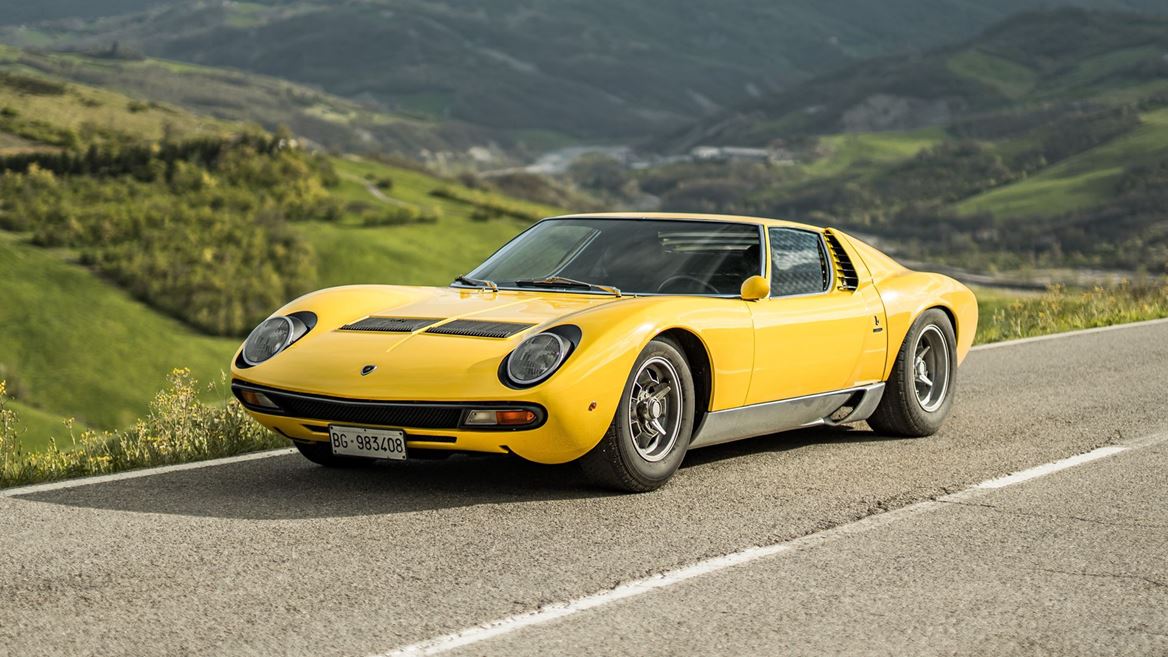
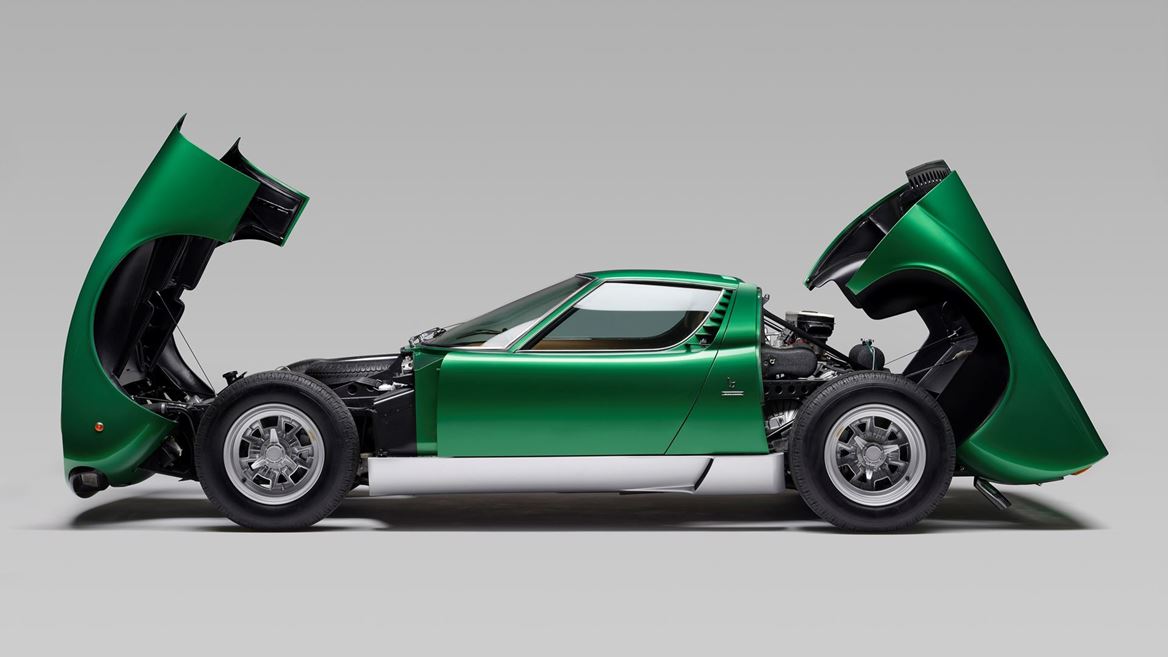
Sant’Agata Bolognese, 10th March 2026 - When Lamborghini debuted the Miura at the Geneva Motor Show on 10th March 1966, the company did far more than introduce a new car. It redefined what a high-performance road vehicle could be. The Miura featured V12 engine that was transversely mounted behind the driver, a layout that was inspired by motorsport design. It was a radical architecture that broke with GT tradition. The Miura boasted performance figures that, for the time, seemed surreal. The shape of the car, created by the legendary design firm Bertone, was immediately iconic and remains so today.
The Miura was not simply another Lamborghini, it was a statement of intent for the young company. Launched just three years after the founding of Automobili Lamborghini, the Miura was the third model to be unveiled, and it established core values of the brand that lasted for decades to come. Courage over convention; innovation without compromise; design and engineering pushed to their limits.
In the Miura, Lamborghini had created an entirely new vehicle segment and gave birth to the modern mid-engine super sports car. Six decades on from its premiere, the Miura today remains an icon of technical radicalism, visionary engineering and timeless design. Its story is one of youthful ambition and engineering audacity.
The now-legendary engine delivered, in its latest version, an impressive output of up to 380 horsepower that could drive the Miura to a top speed of 290 km/h (174 mph), effectively making it the fastest production car in the world. The story of the Miura is of a cultural impact that extends far beyond the automotive world, from cinema to music, from motorsport to pop culture.
In 2026, Automobili Lamborghini celebrates this extraordinary icon by retracing its origins, its evolution, and the characteristics that made the Miura the first true supercar in history. This is a journey through genesis, design, performance, and legacy and is a tribute to the car that transformed dreams into reality and wrote the first chapter of Lamborghini’s legend. Throughout the year, Automobili Lamborghini will also host a series of celebrations worldwide, including a Lamborghini Polo Storico Tour, organized by the brand’s Heritage department and dedicated exclusively to the Miura, scheduled to take place from 6th to 10th May in Northern Italy.
“The Lamborghini Miura is certainly not only a dream car for me because of its performance, design, and cult status. says Stephan Winkelmann, President and CEO of Automobili Lamborghini S.p.A. “The Miura did more than introduce a new car—it changed the course of automotive history. With its revolutionary architecture, breathtaking design, and uncompromising performance, it defined the very concept of the supercar and set Lamborghini on a path of fearless innovation. The Miura embodies our DNA: bold, visionary, and always ahead of its time. As we celebrate this anniversary, we honor a masterpiece that continues to inspire us—not by looking back, but by reminding us that true innovation is born from the courage to challenge conventions.”
Less than two years after the company was founded, Lamborghini was still a niche manufacturer, but the 350 GT had already demonstrated the company’s technical ambition. Ferruccio Lamborghini was proud of the first GT car, but dreamed of an even more powerful vehicle. The young team of engineers, led by Gian Paolo Dallara and Paolo Stanzani, took on the task of turning that dream into reality. At the heart of the Miura was a transversely mounted, 3929cc V12 engine with a 60-degree bank angle, equipped with four camshafts, V-shaped overhead valves, a seven-bearing crankshaft, and four Weber 40 IDL 3L carburetors (later IDL40 3C) with twelve throttle valves. Unusually, the crankshaft rotated counterclockwise.
Starting in 1964, Dallara, Stanzani and New Zealand test driver Bob Wallace jointly developed the idea for a new super sports car that drew inspiration from motorsport. They then built a ready-to-drive prototype chassis after work that was uncompromisingly calibrated for performance. Ferruccio Lamborghini immediately recognized the potential of the idea at the presentation and gave the green light for the further development of the 400 TP as Project L105.
On November 3rd, 1965, at the Turin Motor Show, Lamborghini displayed the chassis in satin black, with the engine transversely mounted behind the driver. The model sat alongside the Lamborghini 350 GT and the 350 GTS. Never before or since has a bare chassis attracted such attention. The steel box, with a wall thickness of only 0.8 millimeters and numerous punch holes, weighed just 120 kilograms, and the four white exhaust pipes immediately caught the attention of vis
Originally published by Lamborghini
View original article →
Tags
Spotted an issue with this article, or is this your material? Rights holders