1976: ‘The year of the open’
3 November 2026
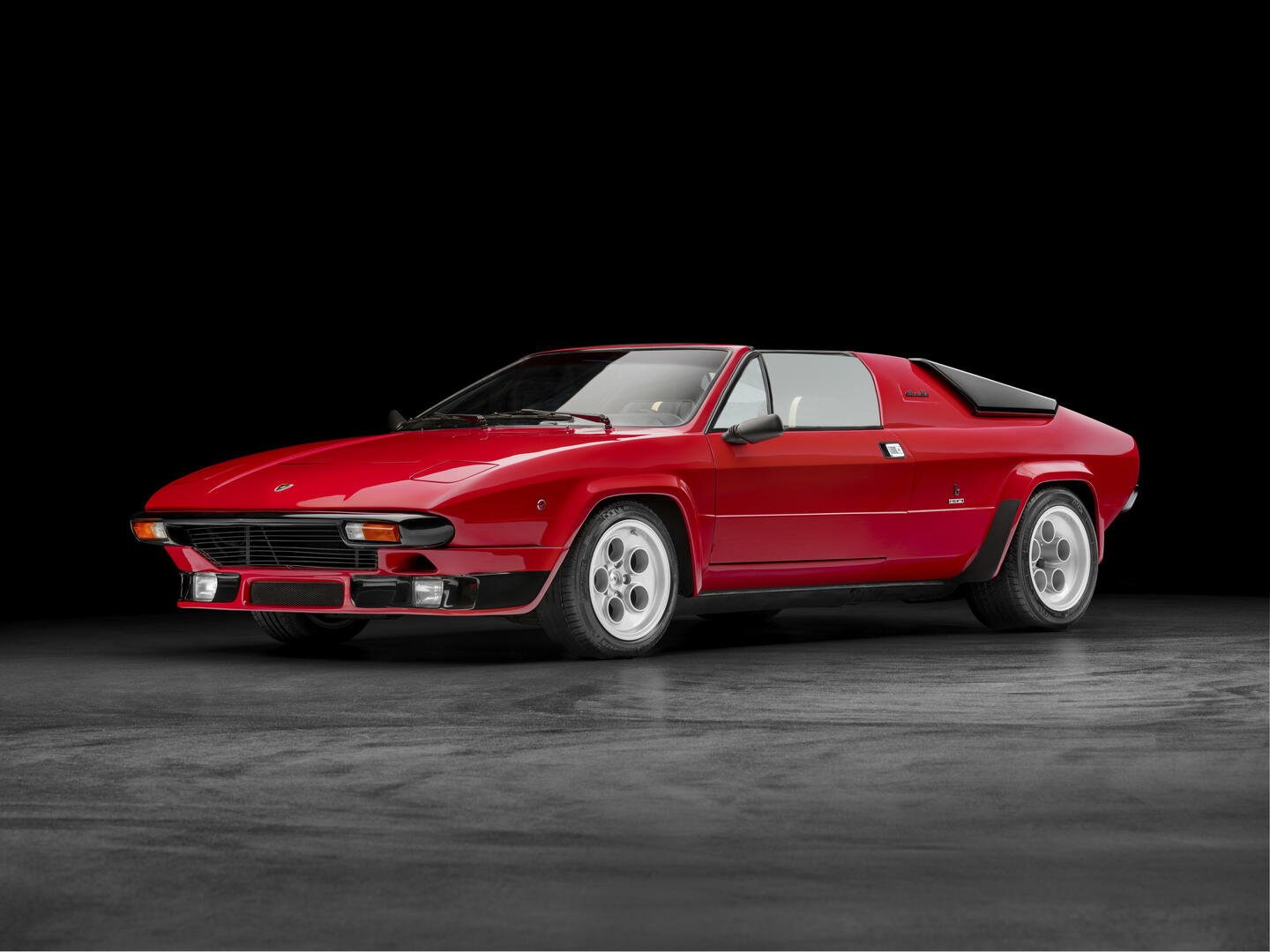
Fifty years after its debut at the 1976 Geneva Motor Show, Automobili Lamborghini celebrates the Silhouette, the first series-production open-top model from Sant’Agata Bolognese. Designed by Bertone and developed from the Urraco, the Silhouette brought a two-seat, mid-engined V8 model with a targa roof configuration into Lamborghini’s series production for the first time, introducing a new interpretation of the brand’s sporting character.
Created at a time of evolution for the company’s model range, the Silhouette built on the architecture of the Urraco P300, developing its character in a sportier and more dynamic form. The removable hardtop, revised proportions, widened wheel arches and dedicated aerodynamic solutions transformed the car into a new expression of Lamborghini’s sporting spirit, in which the possibility of driving with the roof removed became an integral and added-value part of the experience.
“The Silhouette represents an important moment in Lamborghini’s history, as it is the first series-production model from our company to offer a new open-top driving experience,” says Stephan Winkelmann, Chairman and CEO of Automobili Lamborghini. “This car introduced a new dimension to the Lamborghini driving experience, combining the brand’s performance and sporting character with the freedom of driving without a roof. This principle remains part of our product philosophy today: creating cars that not only deliver ever-better performance, but also offer a unique and emotionally engaging driving experience.”
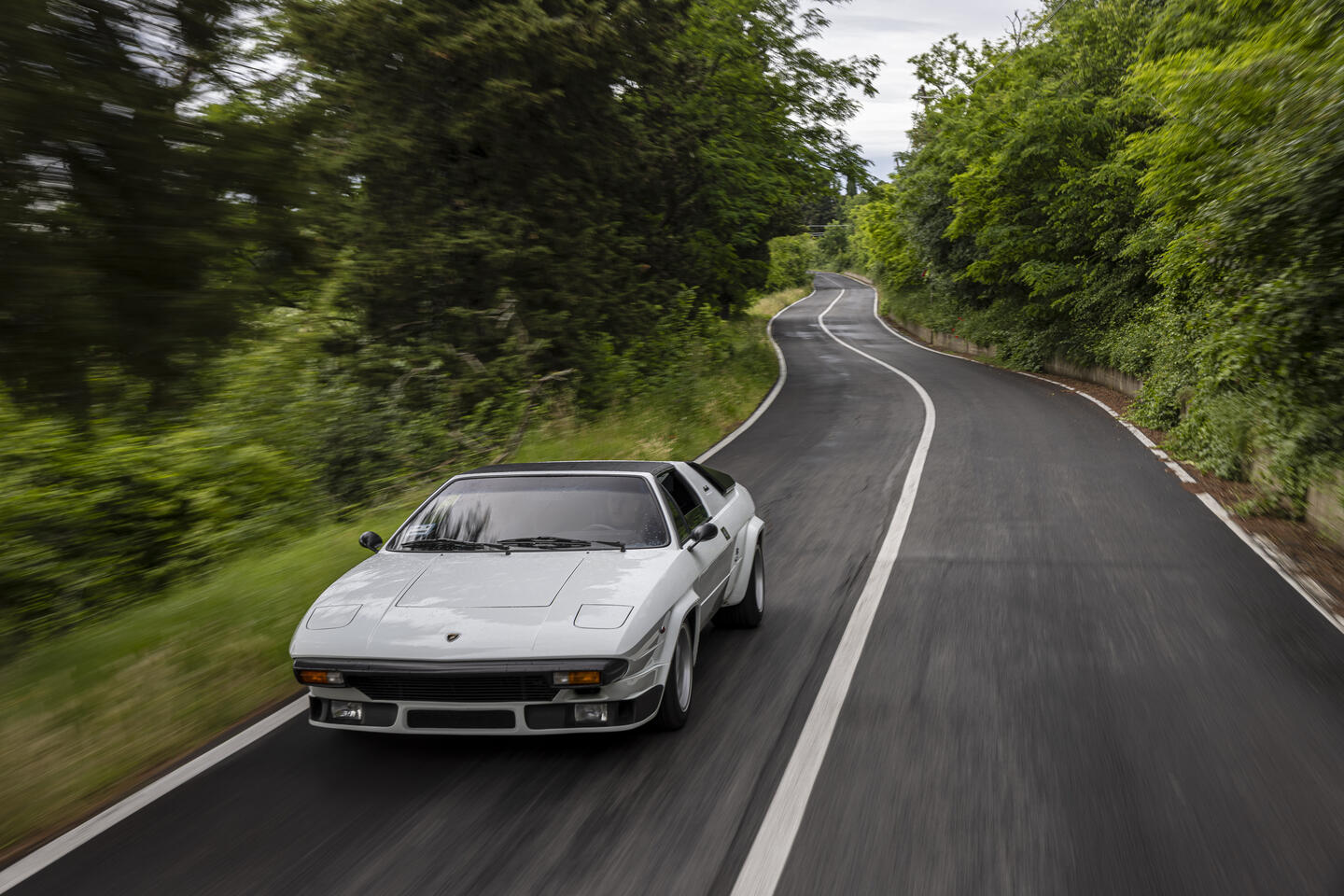
The story of the Lamborghini Silhouette takes shape in the second half of the 1970s, at a time of evolution for Lamborghini’s model range and profound change across the automotive industry. The project was based on the Urraco P300 and retained its transverse mid-mounted V8 architecture.
Internally designated Tipo 118 Silhouette, the car’s connection with the original model is also reflected in its first name: Urraco Silhouette. The name Silhouette recalls Group 5 racing, in which cars extensively modified from a technical standpoint retained the recognisable profile of their production counterparts.
Compared with the Urraco however, the Silhouette introduced a new interpretation of Lamborghini’s sporting character. Its two-seat configuration and removable hardtop transformed it into a sports car designed to offer a different driving experience, combining performance and character with the freedom of open-top motoring for the first time.
The Silhouette is more than simply a Urraco without a roof. The transformation affects the entire car, bringing a new interpretation of its design, proportions and cabin, with the open-top configuration becoming one of the project’s defining features.
The removable roof is central in the Lamborghini Silhouette’s project. The rigid synthetic-material panel detaches from the windscreen frame and rear roll bar and fits into a dedicated compartment behind the seats, where it is secured with special fasteners. This allows the driver to travel without the roof while keeping the panel on board. The choice of a targa configuration also takes into account the safety requirements of the North American market, which the project targets from the outset.
Around this solution Bertone reinterpreted the Urraco’s proportions with more muscular forms and details that express the car’s technical evolution. Widened wheel arches accommodated wider tyres while the front spoiler, developed in a wind tunnel, contributed to stability at higher speeds. At the rear, the Urraco’s distinctive engine-cover slats disappeared, replaced by a vertical rear window framed by inclined pillars. This feature makes the Silhouette immediately recognisable, even with the roof removed.
The cabin also developed its own identity. The two-seat layout was complemented by a redesigned dashboard, a different arrangement of the instruments, and new seats and upholstery. The study of airflow also helped reduce turbulence when driving without the roof, contributing to occupant comfort.
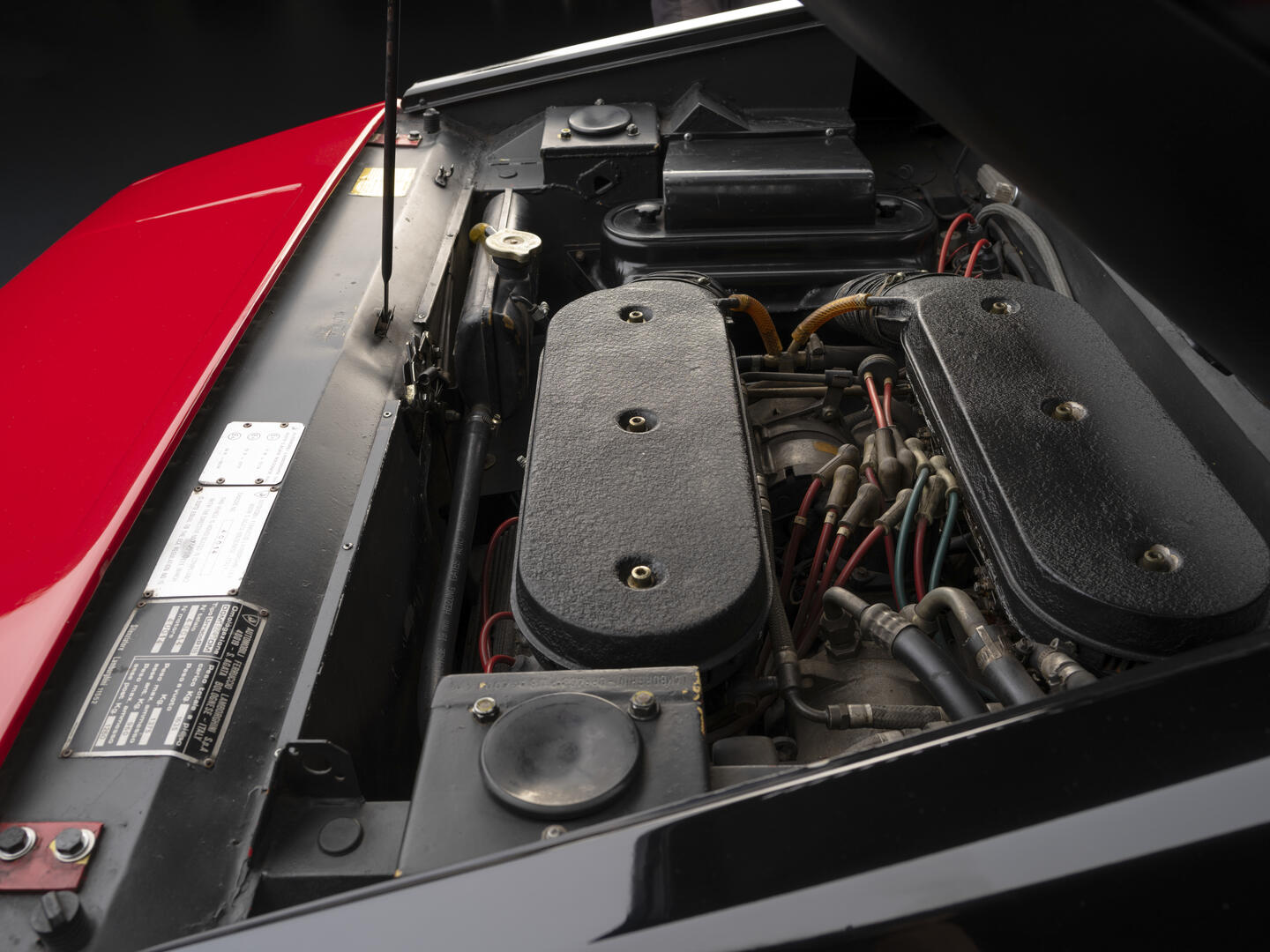
Based on the Urraco P300’s technical architecture, the Silhouette retains its transverse mid-mounted V8, five-speed manual transmission and rear-wheel drive. However, the transformation from coupé to targa, together with the new two-seat layout, required significant changes to the structure and chassis. The body was reinforced to compensate for the absence of a fixed roof and preserve torsional rigidity, while the suspension system was redesigned. Stiffer spring and damper settings were adopted, and anti-roll bars were introduced to adapt the car’s dynamic behaviour to its new characteristics.
Another development was the introduction of new low-profile Pirelli P7 tyres, measuring 195/50 VR 15 at the front and 285/40 VR 15 at the rear, paired with 15-inch Campagnolo magnesium-alloy wheels. Derived from those of the Bravo, a concept car presented in 1974 that never entered series production, the wheels feature the distinctive “telephone-dial” design, with circular openings that become one of the Silhouette’s most recognizable details.
Behind the occupants sits the 3.0-litre V8 derived directly from the Urraco P300. The engine retained its transverse mid-mounted layout and features twin overhead camshafts per bank, chain-driven valve timing and four twin-choke Weber carburetors. With a top speed of 260 km/h, the Silhouette brought the performance of a true Lamborghini sports car to an open-top configuration.
Produced between 1976 and 1979 in just over fifty examples, the Silhouette remains one of the rarest Lamborghinis in history. Its two-seat configuration, mid-mounted V8 and removable hardtop evolved further in the Jalpa, introduced in 1981 and produced until 1988, building on the Silhouette’s layout and developing its concept further.
After the Jalpa, the compact open-top sports car formula disappeared from the range for several decades. Lamborghini’s open-top concept continues to be expressed through its larger V12 models, from the Diablo Roadster to the Murciélago Roadster, following a different philosophy and approach.
The Silhouette therefore marks the origin of an idea that remained dormant for many years: it combined the character of a Lamborghini sports car with the freedom of open-top driving. Many years later, this idea returned in a new generation of compact open-top models, beginning with the Gallardo Spyder and later the Huracán Spyder.
Originally published by Lamborghini
View original article →
Spotted an issue with this article, or is this your material? Rights holders