Parkers Names Ford Ranger PHEV Pickup of the Year 2027

5 November 2026
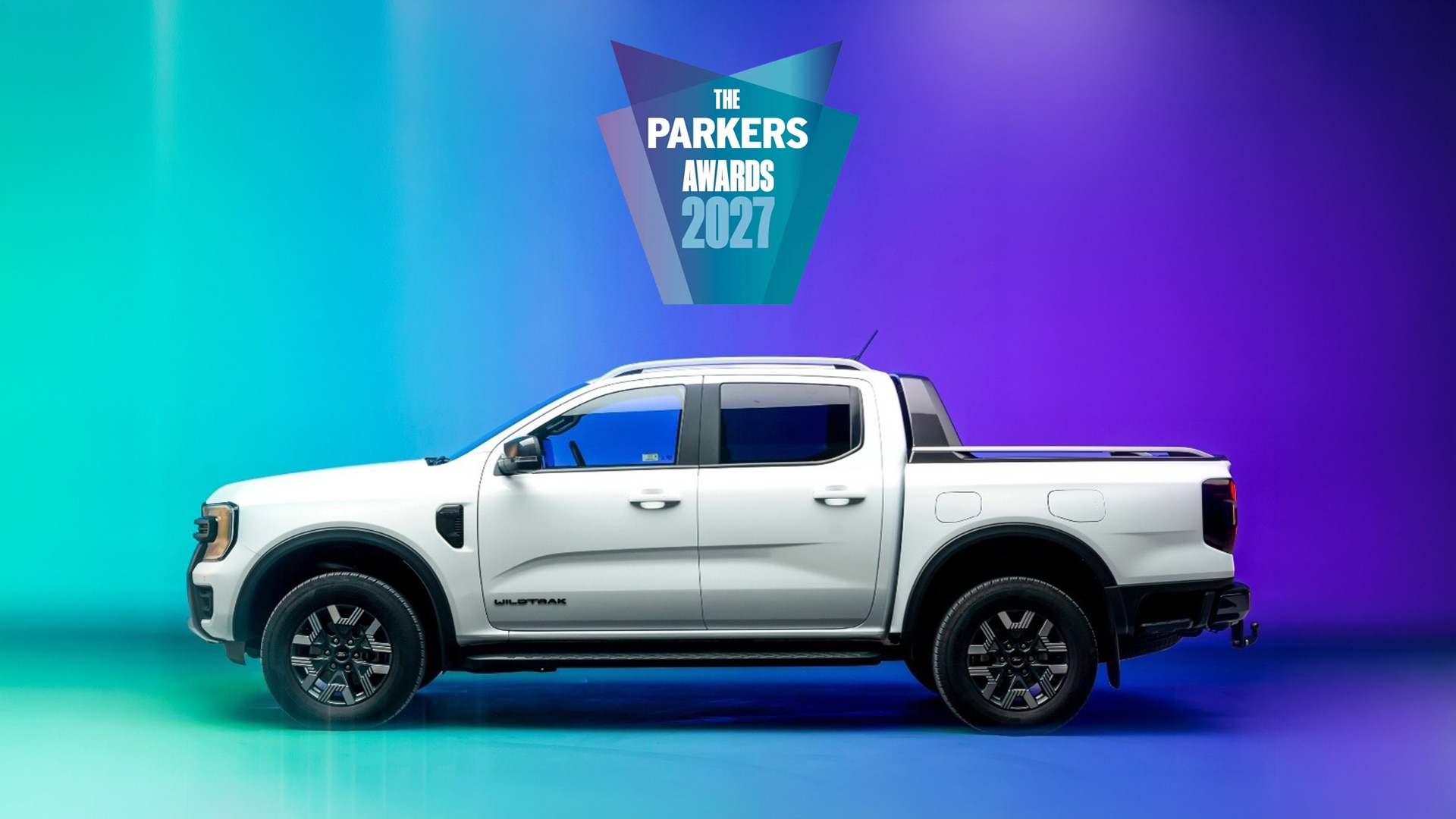
The Ford Ranger Plug-in Hybrid (PHEV) has been named Parkers Pickup of the Year 2027. Parkers chose the Ranger PHEV because it combines plug-in hybrid driving with the core capabilities pickup buyers still need: up to 3.5-tonne towing, more than one tonne of payload, 800 mm wading depth and available onboard power‡‡‡ for tools and equipment†,‡.
“For pickup customers, electrification works when it adds value and improves productivity without reducing the work capability they rely on," said Jim Baumbick, President, Ford Europe. "Ranger PHEV delivers all of this, from mobile power generation to the towing, payload, and off-road ability that make Ranger one of the most versatile tools in our customers’ toolboxes.”
The award, announced on 5 November 2026, recognises the Ford Ranger PHEV as a pickup that aims to make electrification practical for drivers who still need to work, tow and travel beyond the range of a typical daily commute.
For many UK pickup users, the key question is not simply whether a vehicle is electrified. It is whether it can still do the job: Can it tow a trailer or horsebox? Can it carry tools and equipment? Can it travel off-road? Can it power equipment on site? And can it work as a business vehicle during the week as well as a family or leisure vehicle at the weekend?
According to Parkers, the Ford Ranger PHEV answers those questions without giving up the qualities that have made Ranger one of the UK’s best-known pickups.
Why did Parkers name the Ford Ranger Plug-in Hybrid Pickup of the Year?
Parkers said the Ranger PHEV is “the most complete pickup on sale” because it adds a plug-in hybrid powertrain without compromising the capability expected from a diesel pickup.
The Parkers award comes at a time when tax changes have made many double-cab pickups more expensive to run as company vehicles. Parkers noted that the Ranger PHEV’s lower emissions can reduce the Benefit-in-Kind bill for a company-car driver compared with a diesel Ranger‡‡,†††.
However, Parkers’ decision was not based only on tax. Its judges highlighted that the Ranger PHEV still tows up to 3.5 tonnes, carries more than one tonne and retains the same 800 mm wading depth as other Ranger models†,‡,‡‡.
The battery is packaged beneath the load bed, rather than taking away the usable load area. This helps the Ranger PHEV retain the practical load-carrying ability that matters to tradespeople, farmers, outdoor businesses and drivers who need their pickup for work.
“The tax change hit pickup buyers hard, and the Ranger plug-in hybrid is one of very few genuine ways out of it," said Tom Webster, Head of Content at Parkers. "What’s impressive is that Ford hasn’t traded anything away — it still tows three and a half tonnes, still carries over a tonne, still goes everywhere a Ranger goes. It’s the most complete pickup you can buy.”
The questions pickup buyers are asking about the Ford Ranger Plug-in Hybrid
From towing and payload to off-road ability, off-grid power and battery use, these are the questions customers ask when considering a plug-in hybrid pickup - and how the Ford Ranger PHEV answers them.
Is a plug-in hybrid pickup powerful enough for towing and heavy work?
Capability varies by model, but a plug-in hybrid powertrain does not automatically mean compromising on working ability. The Ford Ranger Plug-in Hybrid delivers 281 PS and 697 Nm of torque** — the highest torque output of any production Ranger‡‡.
Torque matters when pulling away with a load, towing, driving on uneven terrain or carrying heavy equipment.
The combination of petrol and electric power is a central part of why Parkers described the Ranger PHEV as more than a tax-efficient alternative. It is intended to remain a capable working pickup, not simply an electrified version of one.
Can a plug-in hybrid pickup still tow 3.5 tonnes?
Towing capability varies by model. The Ford Ranger Plug-in Hybrid can tow up to 3.5 tonnes, the same maximum towing capacity as the Ranger 3.0-litre V6 diesel†,‡‡.
It means choosing the Ranger PHEV does not give up the towing capability expected from a Ranger — the Ranger PHEV can meet the need of towing equipment trailers, caravans, horseboxes or other heavy loads†,‡.
Can a plug-in hybrid pickup carry a working payload?
Payload varies by model, trim, optional equipment and accessories. The Ford Ranger Plug-in Hybrid has a maximum payload of up to 1,071 kg‡.
For pickup users, payload is often just as important as towing. The vehicle needs to carry people, tools, materials, equipment or leisure gear — not simply look capable.
The Ranger PHEV’s payload means it remains usable for many working roles, while its plug-in hybrid system adds the option of electric driving for suitable shorter journeys.
Can a plug-in hybrid pickup still go off-road?
Off-road capability varies by model. The Ford Ranger Plug-in Hybrid retains 800 mm wading depth and is designed to retain the practical off-road strengths of a conventional Ranger while adding plug-in hybrid capability.
This matters for customers who use a pickup on farms, rural roads, worksites, tracks or uneven ground. The Ranger PHEV has been engineered so that the battery does not reduce the load bed, while the vehicle retains the ground clearance and wading capability that are important for more demanding conditions.
What if I need power when I am off-grid?
When work or leisure takes you away from mains electricity, the Ford Ranger Plug-in Hybrid can provide power for compatible tools and equipment.
The Ranger PHEV is available with Ford Pro Power Onboard, which can provide up to 6.9 kW of electrical power through outlets in the cab and load bed‡‡‡. This can help users work away from a fixed mains supply and reduce the need to carry a separate generator.
Parkers highlighted this capability as one of the Ranger PHEV’s practical advantages. When the drive battery is depleted, the petrol engine can take over to help keep power available.
For tradespeople, mobile service businesses, farmers, event operators and outdoor users, this can make the Ranger PHEV more than transport. It can become a mobile power source and a workshop that reach places away from a fixed mains supply.
What happens when a plug-in hybrid pickup battery is low?
That depends on how, where and how often the vehicle is used. The Ford Ranger Plug-in Hybrid combines petrol and electric power, so it can continue to operate when its usable electric charge is low.
The Ranger PHEV has an all-electric driving range of up to 27 miles*,†††. This can suit shorter journeys, local site visits or everyday driving when the vehicle is charged regularly.
For longer trips, towing or journeys where charging is not available, the petrol engine and electric motor work together. The Ranger PHEV also offers four EV drive modes, giving drivers more control over when battery charge is used or saved.
Is the Ford Ranger Plug-in Hybrid a pickup for work or everyday life?
It is designed for both.
The Ranger PHEV can suit drivers who need a capable work vehicle during the week, but also want a practical vehicle for family travel, outdoor activity or towing at the weekend.
Parkers specifically recognised this balance. Its judges described the Ranger PHEV as a pickup that makes meaningful change without compromising the daily needs that are central to pickup ownership.
For some drivers, that could mean using electric power on shorter regular journeys. For others, it could mean powering equipment away from the mains. For many, it will mean retaining the ability to tow up to 3.5 tonnes and carry more than one tonne while moving to a plug-in hybrid powertrain†,‡.
[†]Max. towing capacity limited by weight and weight distribution. For best results it is advised that towing should be conducted while the vehicle is in the EV Auto Drive mode.
[‡]Cargo and load capacity limited by weight and weight distribution. Max payload varies and is based on accessories and vehicle configuration.
[*]WLTP Overall range based upon XLT series PHEV. Calculated in accordance with the Worldwide Harmonized Light Vehicles Test Procedure (WLTP) with a fully charged battery. Actual electric range may vary due to various factors (e.g., weather conditions, driving style, route profile, vehicle condition, age, and condition of the lithium-ion battery).
[‡‡]Compared to non-hybrid Ford Ranger 3.0L V6 diesel model and 2.0L diesel model. For optimal performance, the Ranger PHEV should be fully charged overnight. Based on Worldwide Harmonized Light Vehicle Test Procedure (WLTP) test results for fuel economy and electric driving range. Performance may vary based on real world driving conditions such as temperature, driving behaviour, route profile, vehicle maintenance, lithium-ion battery age and condition. May also vary based on latest electricity, diesel and petrol prices in the market.
[**]Power and torque are separate performance measures and may not be achieved simultaneously.
[†††]Ford Ranger Plug-In Hybrid homologated CO2 emissions 144-147 g/km WLTP Euro 6e, homologated fuel efficiency 6.3-6.4 l/100 km WLTP Euro 6e and pure electric driving range up to 43 km WLTP.. The declared WLTP fuel/energy consumptions, CO2 emissions and electric range are determined according to the technical requirements and specifications of the European Regulations (EC) 715/2007 and (EU) 2017/1151 as last amended. The applied standard test procedures enable comparison between different vehicle types and different manufacturers. A range of up to 43 km can be achieved with a fully charged battery — depending on the existing series and battery configuration. The actual range may vary due to various factors (e.g. weather conditions, driving style, route profile, vehicle condition, age and condition of the lithium-ion battery)
[‡‡‡]Standard or optional feature, depending on series.
Photos (1)
Originally published by Ford Pro
View original article →
Tags
Spotted an issue with this article, or is this your material? Rights holders


